This is where most calorie tracking dies. Not on the packaged foods with barcodes — on the Tuesday you ate at a friend's house and had no idea what to enter, so you entered nothing. And then nothing the next day either.
Here is how to handle it, in order of effort.
Option 1: Describe it and let AI estimate
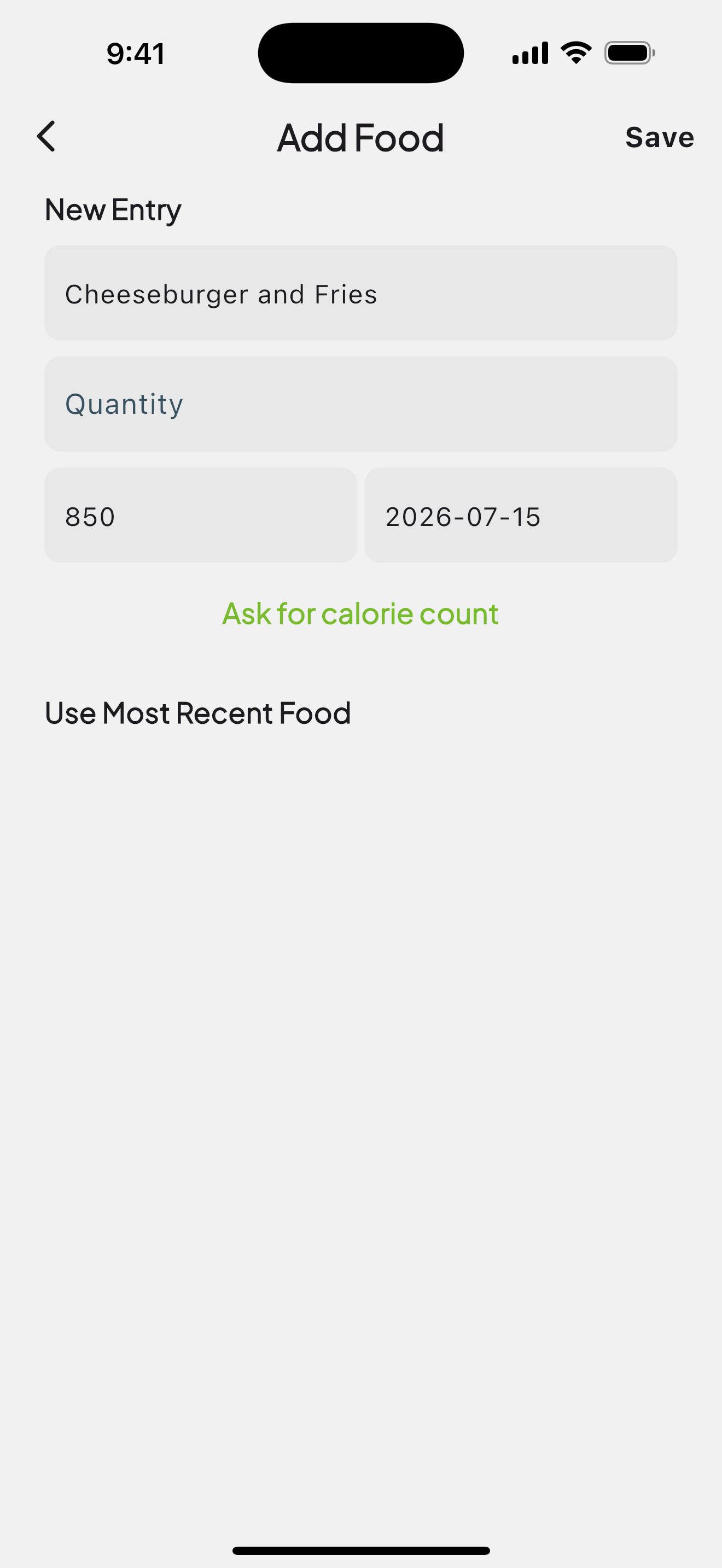
Fastest path. Tap Ask for calorie count and type it in plain language:
- "chicken burrito bowl with rice, black beans, cheese, and salsa"
- "two slices of pepperoni pizza, medium"
- "homemade beef stew, big bowl"
You get a number back in a couple of seconds, and you can adjust it before saving.
Be specific about size and the calorie-dense parts. "Salad" could be 150 calories or 900 — the difference is fried chicken, cheese, candied nuts, and dressing. "Large salad with grilled chicken, avocado, and ranch" gets a much better answer than "salad."
Option 2: Estimate by hand
Useful reference points that require no equipment:
- Palm of protein (chicken, beef, fish) — roughly 150–250 calories
- Cupped handful of rice, pasta, or potato — roughly 150–200
- Thumb of fat (butter, oil, mayo, cheese) — roughly 100
- Fist of vegetables — roughly 25–50
- Tablespoon of cooking oil — about 120, and it is the single most forgotten item in home cooking
Build the plate mentally from those and add them up. A chicken breast, a scoop of rice, some roasted vegetables with oil lands around 550. That is close enough to be useful.
Option 3: Find the closest chain equivalent
Independent restaurants rarely publish nutrition. Chains are legally required to, and food is food.
Ate a burger and fries at a local place? Look up a comparable chain burger and use that number. Pasta at a neighborhood Italian spot? A chain's equivalent dish is a reasonable proxy. You are not looking for precision — you are looking for the right neighborhood.
The restaurant adjustment
One consistent bias worth knowing: restaurant food contains more calories than the same dish made at home. More butter, more oil, larger portions. Professional kitchens are optimizing for taste, and fat tastes good.
When estimating a restaurant meal, take your honest guess and add 20–25%. Most people find this lands them closer to reality.
Why a rough number beats no number
This is the part that matters more than any technique.
Say your real intake was 800 and you logged 650. You were off by 150 calories — annoying, but your day is still roughly accurate and your week is fine.
Now say you logged nothing because you could not be sure. Your day is off by 800, your weekly total is meaningless, and — far worse — you have started the habit of skipping the hard entries. That habit is what ends tracking. Not inaccuracy; avoidance.
The goal was never a perfect food diary. It is a number close enough to steer by, recorded consistently enough to reveal a trend.
A few practical habits
- Log before you eat when you can. Entering it while looking at the plate produces better estimates than reconstructing it at 11pm.
- Round up when unsure. If you are torn between 600 and 750, take 750. Slightly pessimistic estimates keep you honest.
- Save your repeats. Estimate your usual order once and it lives in your most-used list forever.
- Do not skip the drinks. Cocktails, specialty coffees, and juice are routinely a few hundred calories that people forget entirely.
The bottom line
You will never log a restaurant meal perfectly, and you do not need to. Describe it, estimate it, round up, save it, move on. Consistency at 90% accuracy beats perfection you abandon.