The first week is the only hard one. After that, most of your food is already in the app and logging takes seconds.
Here is exactly what to do — and, just as importantly, what not to worry about yet.
Day 1: Get your number and log one meal
Set up your TDEE first: age, gender, height, weight. The app gives you your daily burn on a sedentary baseline — what you burn doing nothing, so any movement counts as a bonus.
Then log one meal. Just one. Not the whole day — one meal, so the mechanics stop being unfamiliar.
Today's goal: know your number, log something. That is it.
Day 2: Log everything, change nothing
Here is the counterintuitive instruction: eat exactly how you normally eat. No restriction, no "being good." Just log it.
This is the most valuable day of the week. Most people have never seen their actual intake, and the number is usually a few hundred calories higher than they assumed. That gap is not a failure — it is the discovery that makes the whole thing solvable.
Log the coffee. Log the handful of chips. Log the bite of your kid's dinner.
Day 3: Meet the AI estimator
Today you will eat something you cannot measure — a restaurant meal, a friend's cooking, a sandwich of uncertain origin.
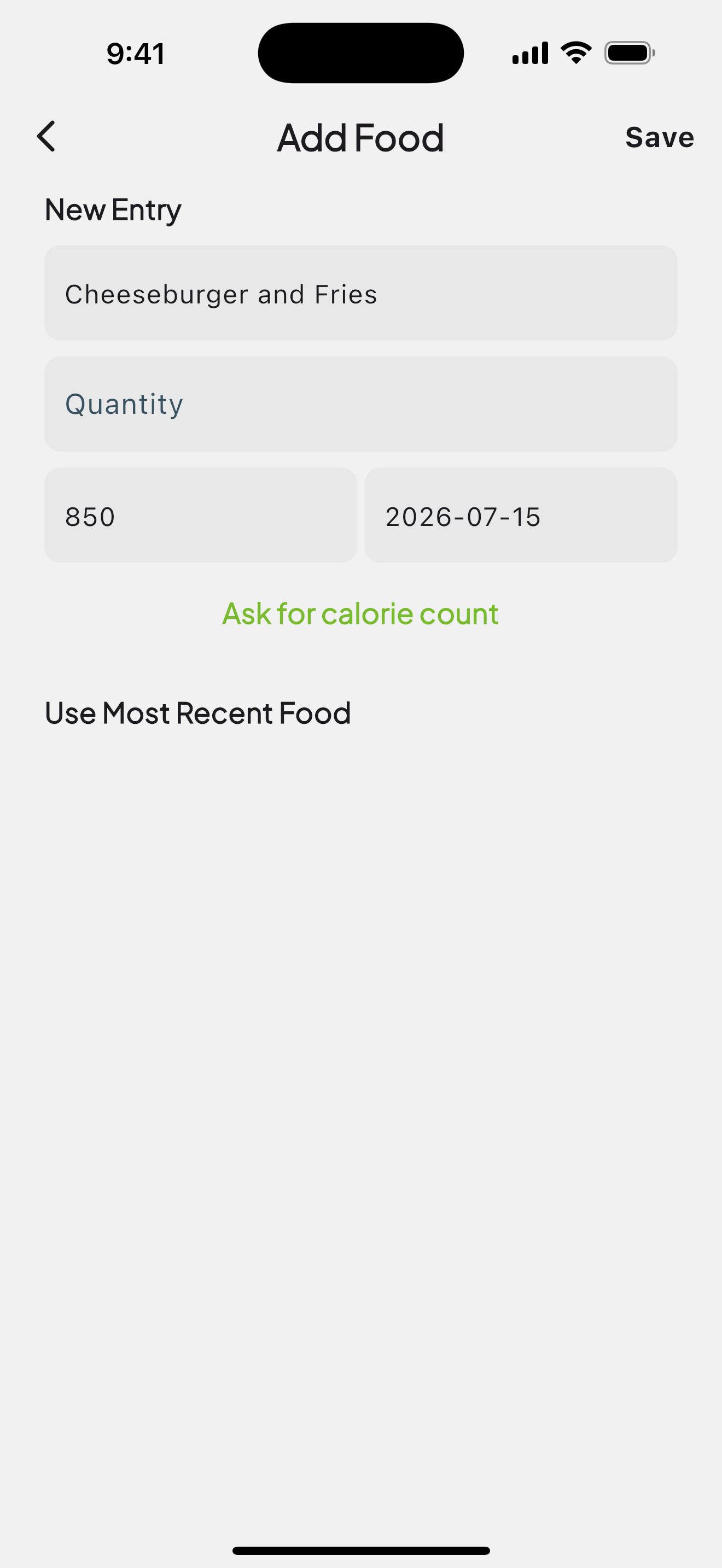
Use Ask for calorie count. Type what you ate in plain language ("chicken burrito bowl with rice, beans, cheese") and the app returns an estimate you can adjust. It is not laboratory-precise. It is close, it takes five seconds, and it is enormously better than skipping the entry.
Day 4: Notice the list building itself
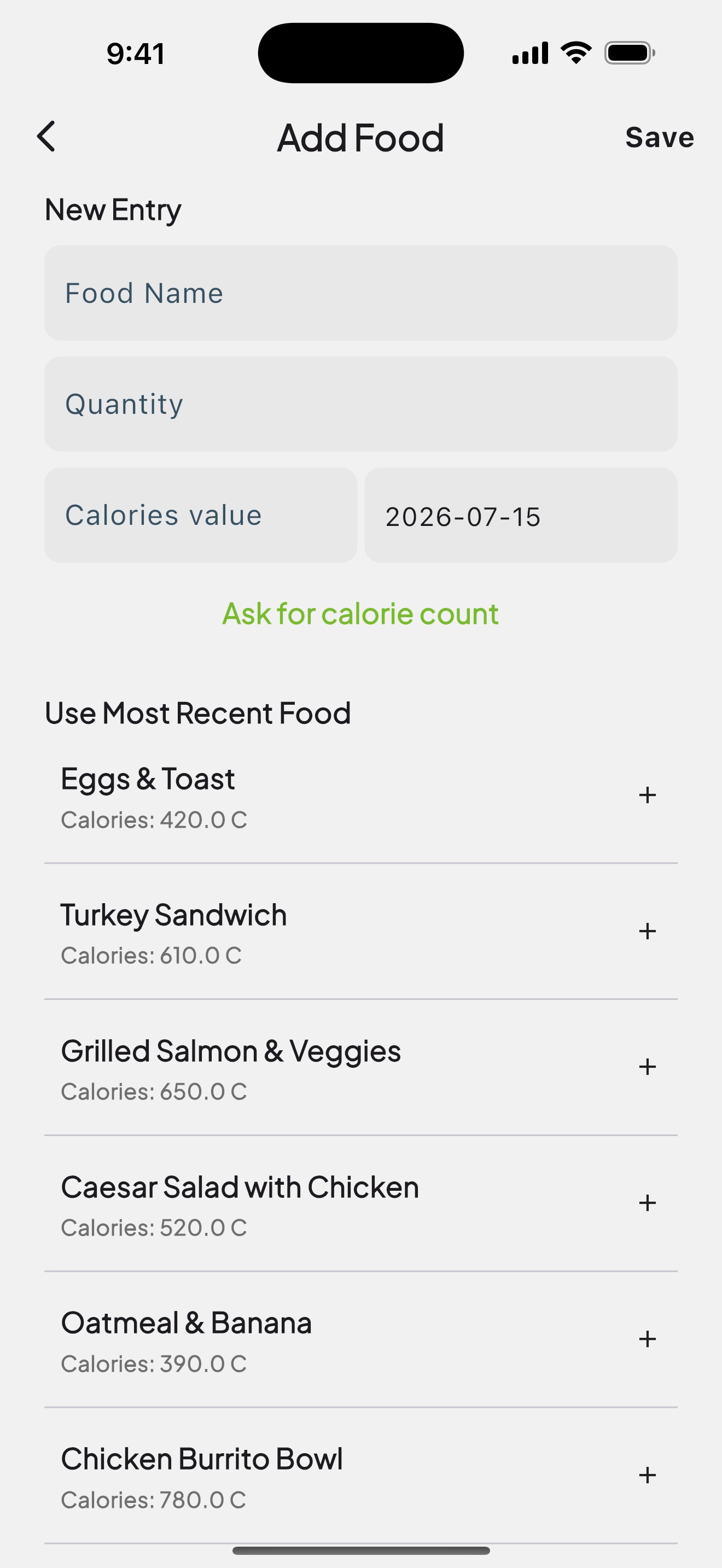
Open Add Food and look at Use Most Recent Food. Your breakfast is probably already there. Tap it, and you are done.
This is the payoff for days 2 and 3. Most people rotate through roughly twenty meals, so by the end of the week the majority of your logging is tapping things you have already entered. Each food appears once, no matter how many times you have logged it.
Day 5: Set your real target
You now have three or four days of honest data. Look at your average.
Subtract 300–500 calories from your TDEE and make that your target. Resist going more aggressive — the deficit you can sustain for six months beats the one you abandon in eleven days.
Today is the first day you are actively trying to land under your number.
Day 6: Log a workout
Any movement counts — a walk, a gym session, mowing the lawn. Because your TDEE assumes you did nothing, whatever you log subtracts on top and gives you genuine extra room today.
Also worth seeing: a 30-minute walk is roughly 150 calories, not 600. That is a useful calibration, and it is why the food side does most of the work.
Day 7: Look at the streak, not the scale
Check the dashboard. You should have a few green days — each one a day you finished under your TDEE — and a running seven-day total converted into approximate pounds.
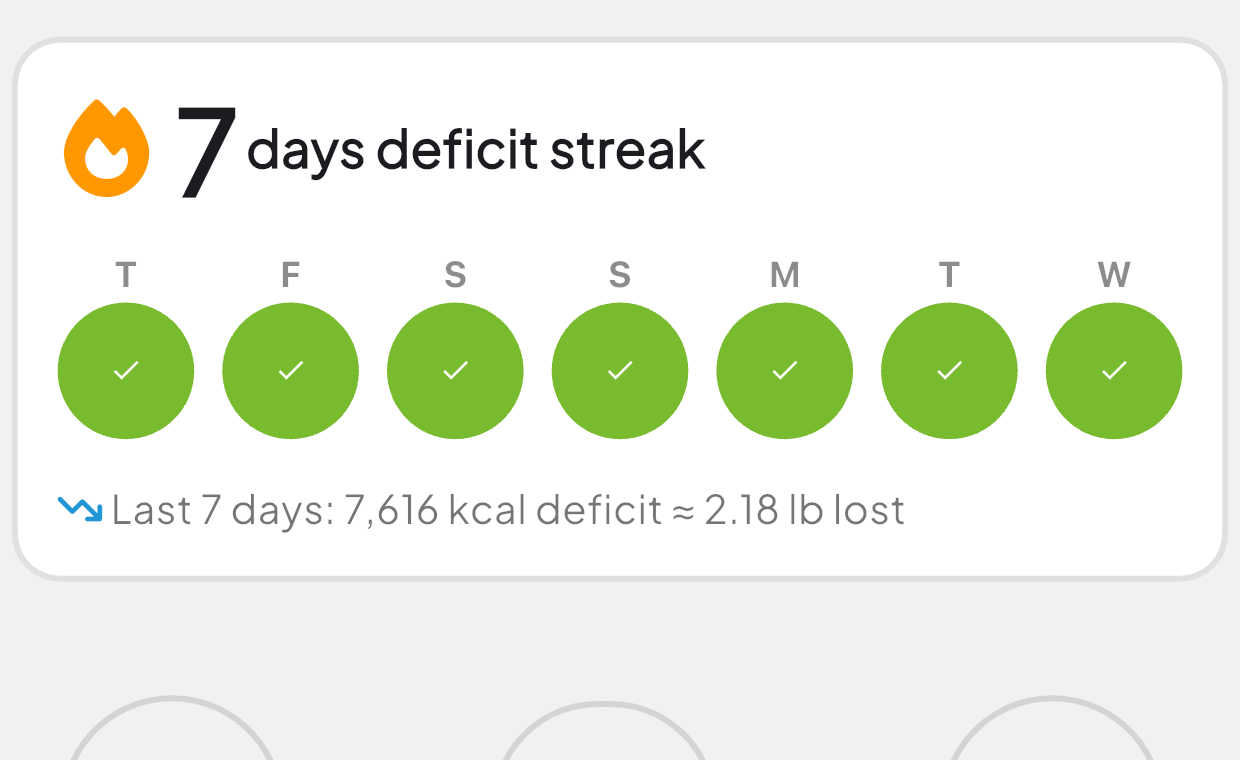
If you weighed yourself, the number may be strange. Week one is noisy — water shifts from changing how you eat can easily mask real fat loss. Judge week one by whether you logged, not by the scale.
What to ignore for now
- Macros. Calories first. Protein becomes worth attention around month two.
- Perfect accuracy. An estimate you actually record beats a precise number you never enter.
- Daily scale drama. Trends need two to three weeks before they mean anything.
- Fixing everything at once. Logging is this week's habit. That is enough.
What week two looks like
Faster. Your common foods are saved, logging takes under a minute a day, and your attention shifts from "how does this work" to "am I under my number." That is the habit — and it is the whole thing.